
Most compounds in this catalog are supplied as lyophilized powder in a sealed vial; a subset is also supplied in encapsulated form. The two formats differ in physical state, preparation, and storage — not in the analytical standard applied to them.
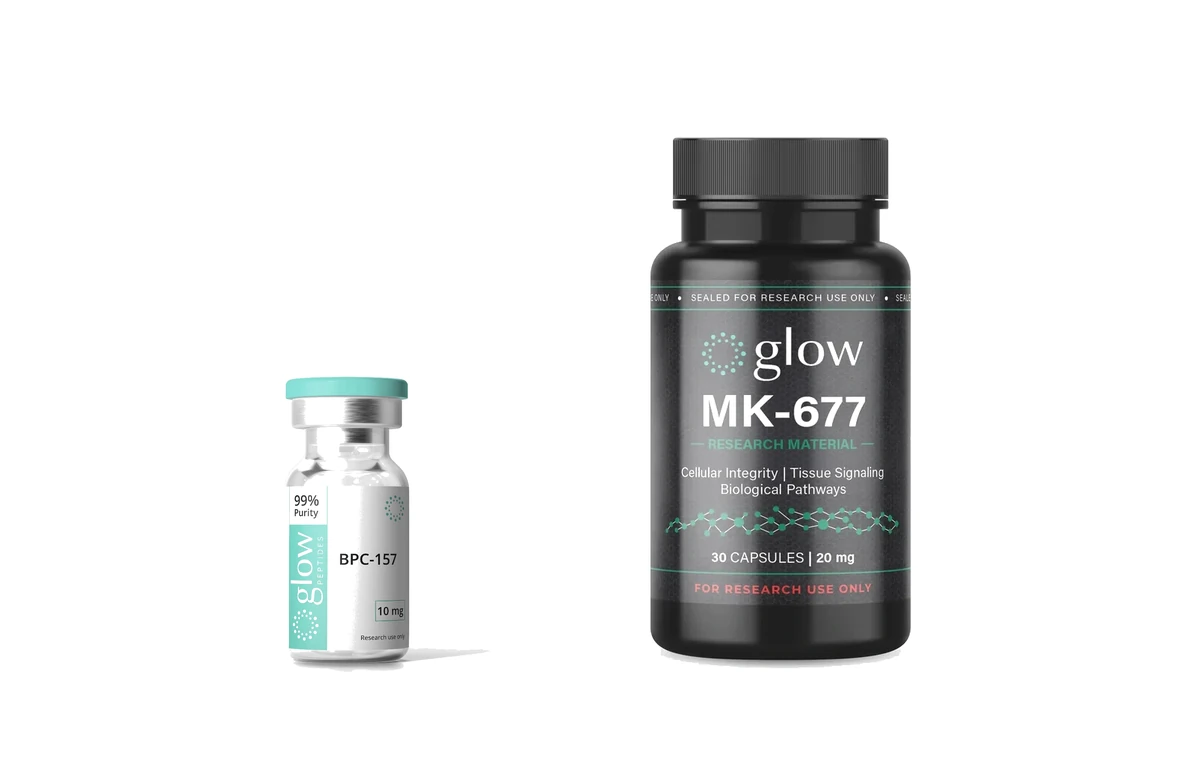
| Property | Lyophilized vial | Capsule format |
|---|---|---|
| Physical state | Freeze-dried solid, sealed glass vial | Encapsulated solid, sealed container |
| Typical storage | −20 °C, protected from light and moisture | Cool, dry, away from light; refrigeration extends shelf life |
| Content specification | Stated mass per vial (e.g. 10 mg) | Stated count per container (e.g. 30 capsules) |
| Freeze-thaw consideration | Avoid repeated cycles | Not applicable |
| Purity standard | ≥99.2% (HPLC) | ≥99.2% (HPLC) on the active compound |
| Lot documentation | Lot-specific COA | Lot-specific COA |
Why lyophilization is used at all
Freeze-drying removes water, and water is what drives most peptide degradation pathways. A lyophilized solid stored cold and dark is substantially more stable than the same peptide in solution, which is why reference materials ship dry rather than pre-dissolved.
Choosing a format for a protocol
The vial format supplies a stated mass of dry material per vial; the encapsulated format supplies a stated count of solid units per container with fewer handling variables. Both carry the same independent U.S. laboratory testing and the same lot-specific documentation.
Supplied strictly as a research reference material for in-vitro laboratory use. Not for human or veterinary use.
Frequently asked questions
Are capsules and vials tested to the same standard?
Yes. Both formats are released against independent U.S. laboratory testing with a lot-specific Certificate of Analysis, and the active compound meets the same ≥99.2% purity floor.
Why are most research peptides supplied lyophilized?
Removing water removes the main driver of peptide degradation. A lyophilized solid stored at −20 °C, protected from light and moisture, is considerably more stable than the same peptide held in solution.