Glow Peptides · Research Journal
How Research-Peptide Purity Is Verified
Glow Peptides · 2026-06-10
For research use only. Not for human or veterinary use, diagnostic use, or in any therapeutic application.
"≥99% pure" appears on a lot of research-peptide listings, but it only means something if you know what was measured and how. This is a plain-language guide to the analytical methods behind a credible purity claim — and how to read the Certificate of Analysis that should accompany it.
What "purity" means for a peptide
A synthetic peptide is never the only thing in the vial — synthesis can leave truncated sequences, deletion or insertion byproducts, and residual reagents. "Purity" is the percentage of the material that is the intended peptide, by a defined analytical method. A number with no method behind it isn't a specification; it's marketing.
HPLC — the purity number
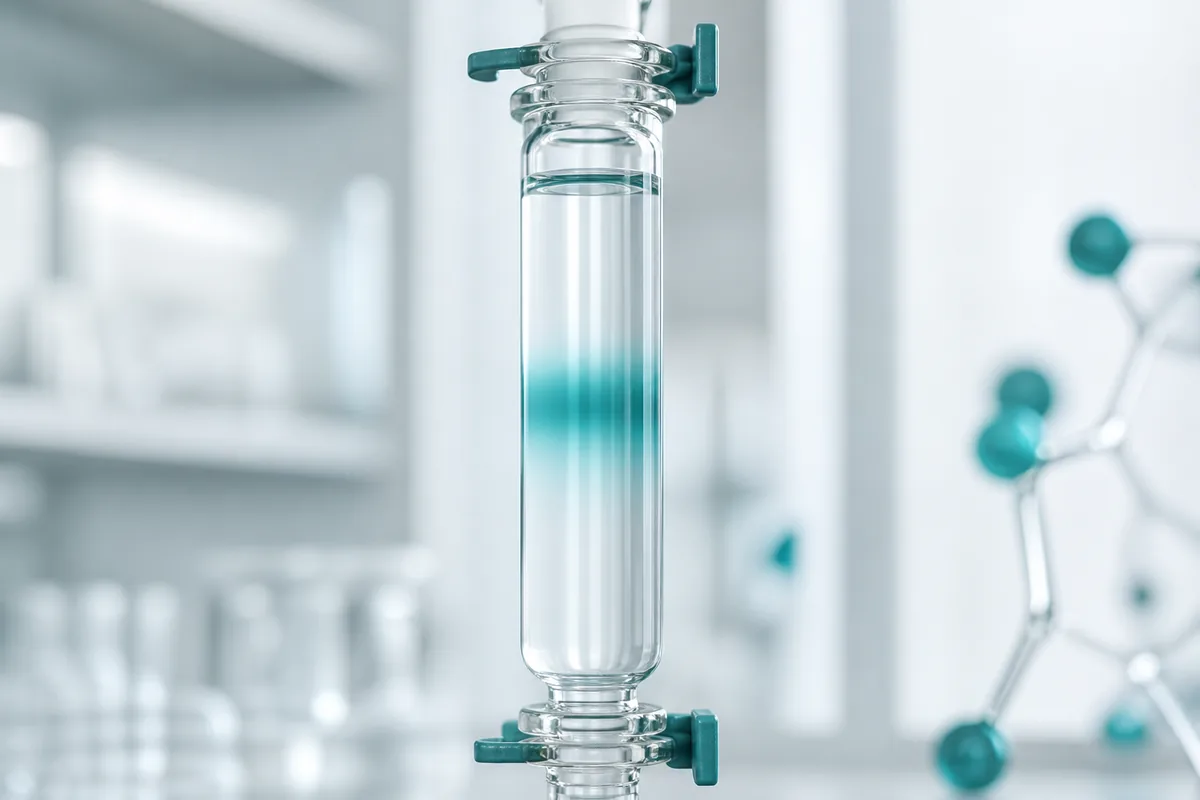
High-performance liquid chromatography (HPLC) separates the components of a sample as they travel through a column at different rates. The intended peptide appears as a dominant peak; impurities show as additional peaks. Integrating the area under each peak yields the purity percentage — this is where a figure like "≥99%" comes from. Reverse-phase HPLC is the standard for peptides.
Mass spectrometry — the identity check
HPLC tells you how much of one species is present; it doesn't by itself confirm that species is the right one. Mass spectrometry (MS) measures molecular weight, confirming the peak corresponds to the target peptide's expected mass. HPLC + MS together answer both questions: is it the right molecule, and how pure is it.
Reading a Certificate of Analysis
A useful COA is lot-specific and states: the analytical method, the measured purity, an MS identity confirmation, and ideally endotoxin screening. Generic, undated, or lot-agnostic certificates don't let you verify the material in your vial.
Why third-party testing matters
Independent testing removes the conflict of interest in a supplier grading its own product. Every research material from Glow Peptides ships with a third-party COA — see our quality standards for how that's done.
_For Research Use Only. Not for human or veterinary use._