Glow Peptides · Research Journal
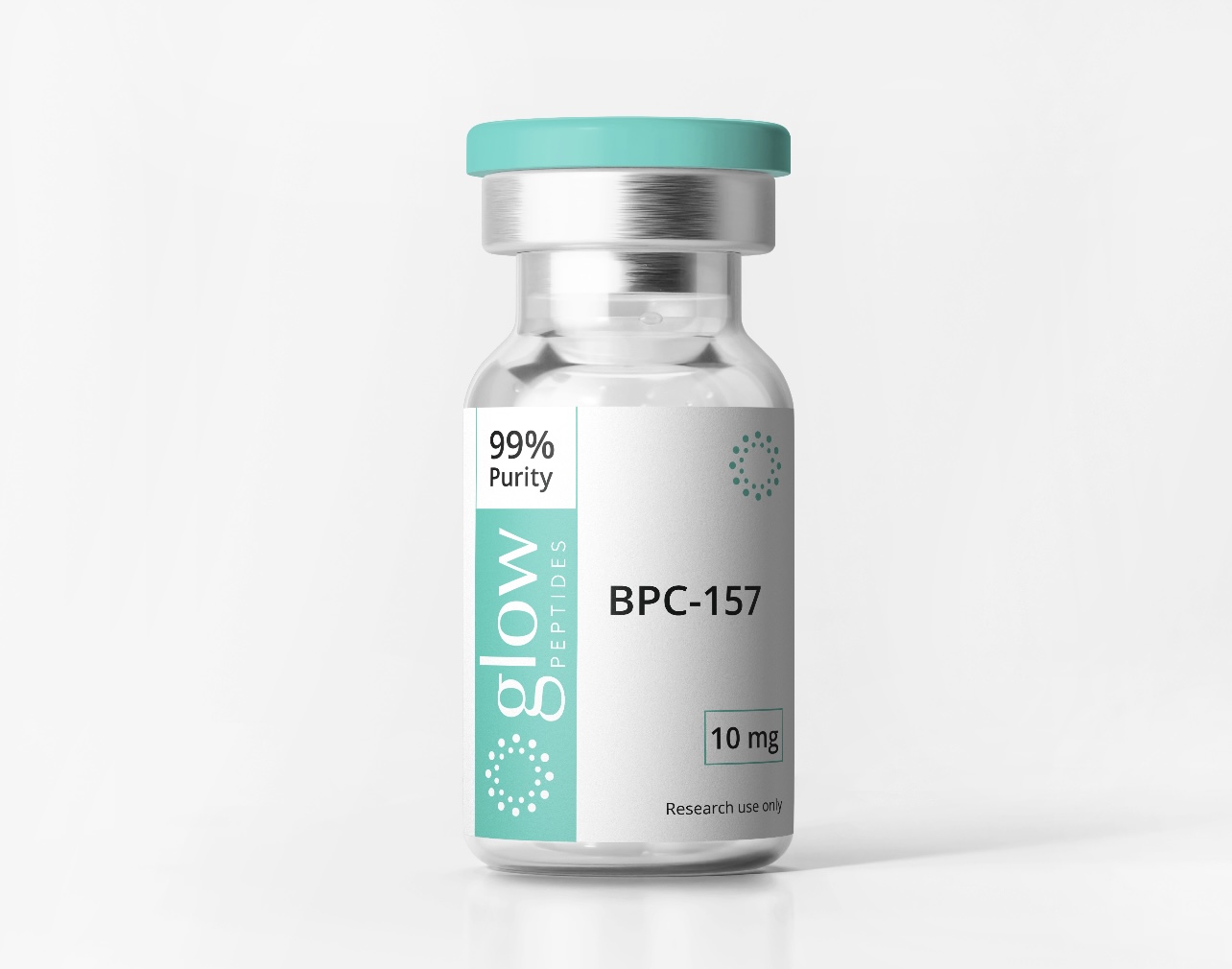
What Is BPC-157? One Sequence, Several Names
Glow Peptides Research Team · 2026-10-07
For research use only. Not for human or veterinary use, diagnostic use, or in any therapeutic application.
BPC-157 is a synthetic peptide of fifteen amino acid residues, which is all the word pentadecapeptide means, with the sequence Gly-Glu-Pro-Pro-Pro-Gly-Lys-Pro-Ala-Asp-Asp-Ala-Gly-Leu-Val. One molecule, one sequence, and a surprising number of labels: the same compound appears in the research literature as Bepecin, PL-14736 and PLD-116, and in the market under salt names that do not all resolve to a public record. This page pins the BPC-157 research vial to its database identity, maps the labels back to the one sequence, and states the regulatory record as plain fact.
The short version
- One record under its own name. PubChem CID 9941957, titled Bpc-157: C62H98N16O22, mass about 1,419.5, CAS 137525-51-0.
- Fifteen residues. The record carries the sequence itself, written H-GEPPPGKPADDAGLV-OH.
- The research literature's other names, Bepecin, PL-14736 and PLD-116, all sit on that same record.
- The salt labels do not all exist in the public record. An acetate record exists at about 1,479.6. A trifluoroacetate name sits on the parent record. An arginate record does not exist at all.
- Regulatory record: on the WADA Prohibited List under S0, Non-Approved Substances, and not approved for human clinical use by the FDA or any other global health authority.
- In this catalog it is a single-compound vial under code BC10, with an encapsulated format alongside, and a component of three blends.
What is BPC-157? What the chemical record says
Strip away everything written about it and what remains is a defined molecule. PubChem, the chemistry database of the US National Library of Medicine, holds it as CID 9941957 under the title Bpc-157: molecular formula C62H98N16O22, molecular weight about 1,419.5, CAS registry number 137525-51-0. The record also carries the sequence as one of its own names, H-GEPPPGKPADDAGLV-OH: fifteen single-letter residue codes between a free amino terminus and a free acid terminus.
Fifteen residues is what pentadecapeptide means, and it puts the compound's size in context. It is a little over four times the mass of a tripeptide like GHK and under a third of even a small protein. On a certificate's identity line, the line reporting what the molecule was measured to weigh, about 1,419.5 is the number a result for the free peptide has to reconcile with.
The originating literature describes the sequence as a partial sequence of a gastric protein its authors called Body Protection Compound, which is where the name comes from. That is the published description of its origin rather than something the database record states, so this page carries it as exactly that: the description its developers gave it.
One molecule, many names: the labels you will see for BPC-157
The same record lists 36 names. Most are formatting variants, but a few matter because they appear in published papers and on supplier pages without any sign they are the same thing:
| Label | Where it tends to appear |
|---|---|
| Bepecin | A nonproprietary-style name carried on the record |
| PL-14736 | A development code used in parts of the published literature. This catalog's product page lists it alongside the main name |
| PLD-116, pl-10 | Other development codes on the same record |
The practical use of knowing this is reconciliation. A paper about PL-14736 and a page about BPC-157 are talking about the same sequence, and a reader who does not know that will undercount or double-count the literature. The method for appraising those papers, record by record, is set out in how to read BPC-157 research records.
Salt forms: why the listed weight differs from label to label
A lyophilized, or freeze-dried, peptide is usually handled as a salt, and the salt is where identical-looking listings stop being identical. Three salt labels circulate for this compound and they have three different standings in the public record.
| Label | Public record | Formula | Mass |
|---|---|---|---|
| BPC-157, free peptide | CID 9941957 | C62H98N16O22 | About 1,419.5 |
| BPC-157 acetate | Its own record, CID 155977614 | C64H102N16O24 | About 1,479.6 |
| BPC-157 trifluoroacetate | A name on the parent record, not a separate entry | Resolves to the parent | Resolves to the parent |
| BPC-157 arginate | No record found | None to cite | None to cite |
Two of those rows are worth dwelling on. The acetate arithmetic closes exactly: 1,479.6 less 1,419.5 is 60.1, and acetic acid weighs 60.05, so the acetate record is the free peptide plus one acetic acid unit, nothing more. That is what a salt label should do: name a defined addition with a checkable mass.
The arginate label does the opposite. Searching the public database for it returns no compound record at all. That does not prove vials sold under the label are anything in particular, good or bad. It proves the label alone identifies nothing, so for a vial carrying it, the lot certificate is the only document that can say what the material is. The same closing logic applies to any salt: purity describes the whole solid including its counterion, the small partner molecule that makes the solid a salt, so the figure that connects a salt to an amount of peptide is net peptide content, read off the document rather than inferred from the name.
Reading a mass against the form
The table turns an identity line into a one-step check. A reported mass that reconciles with about 1,419.5 is the free peptide. One that reconciles with about 1,479.6 is the acetate, and the 60.1 between them is the acetic acid unit itself. A document that names one form and reports the other's mass has crossed its own wires, and that is visible from the two numbers alone, before any question about methods. For a label whose form has no public record, there is no expected mass to check against, which is the whole problem with such labels.
Purity and peptide content are two different numbers
The second consequence of the salt follows from what a purity percentage measures. Chromatographic purity describes the solid as supplied, counterion included: it asks how much of what is in the vial is the intended species, not how much peptide the vial holds. Two lyophilized materials can both clear the same purity floor while carrying different counterions in different proportions, and a milligram of each would then contain different amounts of the fifteen-residue sequence itself.
The figure that bridges the gap is net peptide content, which states how much of the solid's mass is peptide rather than counterion, moisture or residual salts. It is a separate measurement from purity, it lives on the lot document, when it is reported at all, and it is the number to look for whenever the amount of peptide, rather than the cleanliness of the solid, is what a calculation depends on. Purity answers how clean. Net content answers how much. Neither answers the other's question.
One more identifier ties all of this together across databases. The compound's CAS registry number, 137525-51-0, and its FDA substance identifier, UNII 8ED8NXK95P, both sit on the same PubChem record, so a document citing any of the three systems can be reconciled to the same molecule. Identifiers are how the label noise gets canceled: names multiply, registry numbers do not.
BPC-157 and the US regulatory record
Two regulatory facts about this compound are published by the US Anti-Doping Agency and are worth having verbatim rather than paraphrased from forums. BPC-157 is on the World Anti-Doping Agency Prohibited List in the category of S0, Non-Approved Substances. And it is not approved for human clinical use by the US Food and Drug Administration or any other global health authority, in USADA's own words. Both statements are on USADA's BPC-157 page, read 5 October 2026.
Neither fact is a comment on research supply. A compound with no approval anywhere is precisely the kind of material that exists as a research reference standard, and the S0 listing is a fact about sport, not about laboratories. What the two facts do settle is how to read marketing that implies otherwise: there is no approved BPC-157 product anywhere, so any page suggesting approval is contradicting the agencies that keep those lists.
Where BPC-157 sits in this catalog
In this catalog the compound is supplied as a single-compound lyophilized vial under catalog code BC10, listed as BPC-157 · PL 14736 · pentadecapeptide with the same formula and mass as the public record, and in an encapsulated format alongside it. The catalog purity specification is stated by HPLC, and a specification is a floor the supplier undertakes to clear rather than a measurement of any vial; the measured findings for a batch live in that batch's certificate, reachable from the lot document directory, with the field-by-field walkthrough in how to read a peptide certificate of analysis.
It is also the most reused component in the catalog: it appears in the two-component Wolverine blend and in both four-letter blends, where it is co-lyophilized with other peptides into one cake. On a blend's documents, the number to look for is the one this page has been circling the whole way through: an identity result for the BPC-157 component that reconciles with about 1,419.5, or with the stated salt.
Handling and storage for the material are covered in the BPC-157 reference guide, and they are deliberately not repeated here.
The sequence in context
Fifteen residues sits in the middle of this catalog's size range, between tripeptides about a quarter of its mass and chains several times larger. That spread is why an identity figure only means something next to the record it is checked against.
What this page deliberately does not cover
Most of what ranks for this question is built on material that falls outside the scope of a research-use page, and none of it is written here. Saying so plainly is more useful than leaving the gap unexplained.
Glow Peptides supplies cataloged materials for laboratory research only. The materials are not drugs, supplements, cosmetics or medical devices, and they are not intended for human or veterinary use. This page gives no dosing, administration, reconstitution, duration, combination or protocol guidance, states no expected outcomes and makes no claim about what these materials do; those questions are outside what a supplier of research materials should answer. What is in scope, and what this page covers, is composition, strength, purity, analytical methods, handling, storage and documentation.
Frequently asked questions
What is BPC-157?
A synthetic peptide of fifteen amino acid residues, held on PubChem as CID 9941957 with the formula C62H98N16O22 and a mass of about 1,419.5. The record carries the sequence itself, written H-GEPPPGKPADDAGLV-OH. The originating literature describes it as a partial sequence of a gastric protein its authors called Body Protection Compound, which is where the name comes from. It is supplied as a lyophilized research material and is not an approved drug anywhere.
Is BPC-157 a peptide?
Yes, without qualification. It is a chain of fifteen amino acid residues joined by standard peptide bonds, which makes it a pentadecapeptide. That places it well above tripeptides like GHK at three residues and far below proteins, and its mass of about 1,419.5 reflects exactly that size.
Why do different pages list different masses for BPC-157?
Usually because they are describing different forms without saying so. The free peptide is about 1,419.5. The acetate salt has its own public record at about 1,479.6, which is the free peptide plus one acetic acid unit at 60.05. A trifluoroacetate name resolves to the parent record rather than a separate entry, and an arginate label returns no public record at all. A mass only means something once the form it describes is named.
What is BPC-157 arginate?
A market label without a public database identity. Searching PubChem for it returns no compound record, which does not prove anything about any particular vial sold under the label, but does mean the label alone identifies nothing. For material carrying it, the lot certificate is the only document that can say what the vial contains and in what amount.
Is BPC-157 an approved drug?
No. The US Anti-Doping Agency states that it is not approved for human clinical use by the US Food and Drug Administration or any other global health authority, and that it sits on the World Anti-Doping Agency Prohibited List under S0, Non-Approved Substances. Both are regulatory facts about the compound's status, read from USADA on 5 October 2026.
Are Bepecin, PL-14736 and BPC-157 the same compound?
Yes. All three names, along with PLD-116 and other development codes, sit as synonyms on the same PubChem record, CID 9941957, and denote the same fifteen-residue sequence. The practical consequence is for reading the literature: papers published under the development codes and pages written under the modern name describe one molecule.
Sources
- PubChem, National Library of Medicine, National Institutes of Health. Records read 5 October 2026: BPC-157 CID 9941957, with its formula, mass, CAS number, sequence synonym H-GEPPPGKPADDAGLV-OH and the 36-name synonym list including Bepecin, PL-14736, PLD-116, the CAS number 137525-51-0 and the FDA substance identifier UNII 8ED8NXK95P; BPC-157 acetate CID 155977614, formula and mass taken directly from the record. The name lookups for "BPC 157 trifluoroacetate" (resolves to the parent record) and "BPC-157 arginate" (no record found) were run the same day.
- US Anti-Doping Agency, "BPC-157: Experimental Peptide Creates Risk for Athletes", read 5 October 2026, for the WADA Prohibited List S0 categorization, the statement that the compound is not approved for human clinical use by the FDA or any other global health authority, and its description of the compound's origin in the originating literature.
- Glow Peptides live product page for BPC-157, read 5 October 2026, for the listing BPC-157 · PL 14736 · pentadecapeptide, the formula and mass as printed, the catalog code BC10 and the specification wording.
- The acetate mass difference of 60.1 against acetic acid at 60.05 was computed from the two PubChem records named above.
For research use only. Not for human or veterinary use, diagnostic use, or any therapeutic application.